Motivation in Motion
For my final project in Education Studies, I created a short documentary exploring the psychological aspects of student motivation in the classroom. I wanted to move beyond a traditional slideshow and produce something that captured the genuine voices, reactions, and emotions of students and teachers. A standard presentation would have delivered the information, but I hoped a documentary would let viewers feel it.
A big part of why I chose this topic is because I’ve always been interested in how psychology can be used to genuinely connect with people. Whether it’s teammates, classmates, or friends, I’ve learned that understanding how someone thinks and what motivates them can completely change how you communicate and support them.
My background with iMovie came from years of making highlight videos for myself and my teams, so I already understood the technical side of editing—cutting clips, adjusting audio, and organizing sequences. But for this project, I wanted to move beyond mechanics and focus on gathering real perspectives.
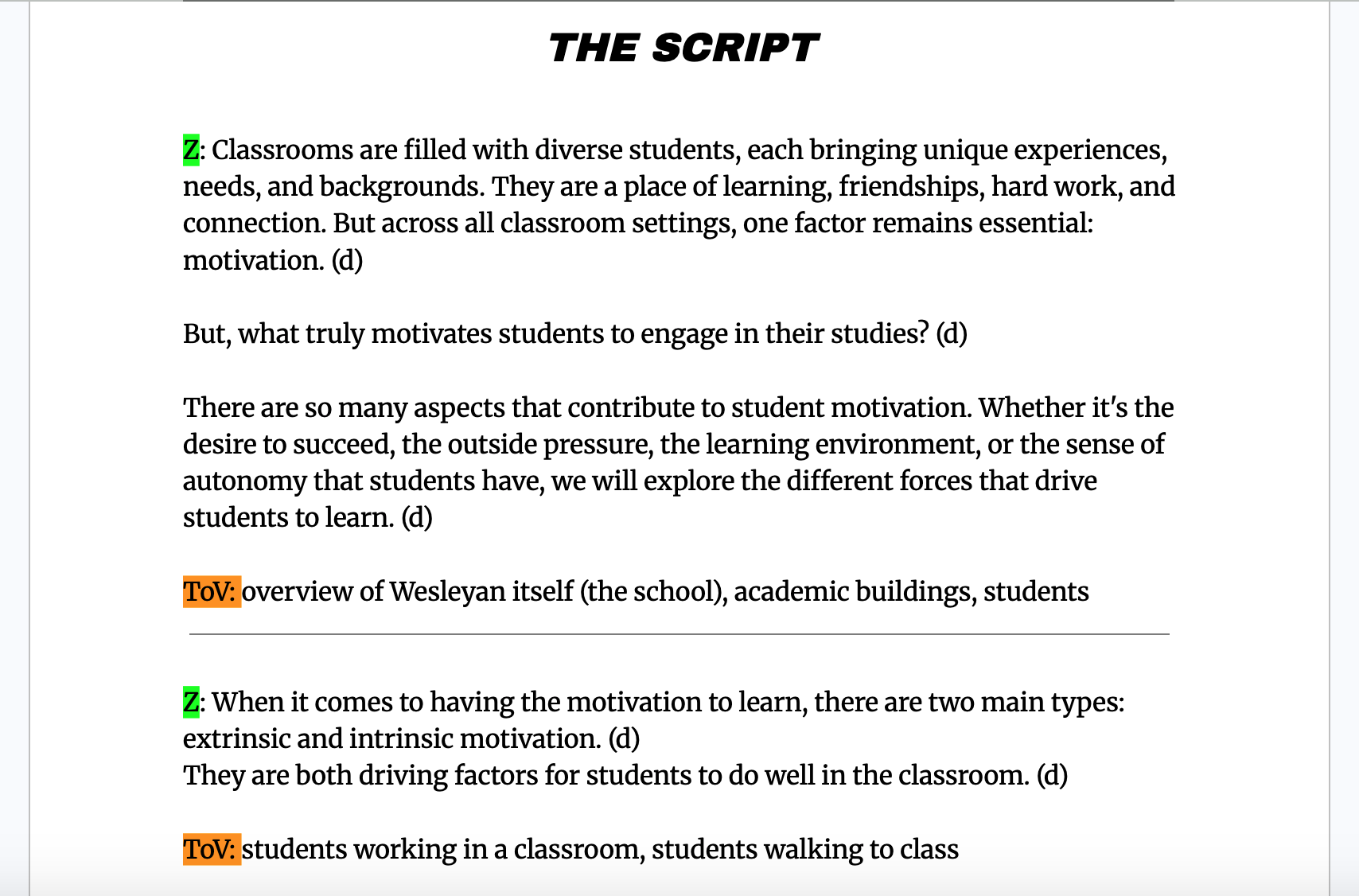
I wrote a set of questions centered on intrinsic and extrinsic motivation, emotion contagion, and teaching approaches, and then interviewed friends on the football and basketball teams. Instead of having them write responses, I recorded their answers on video and wove those clips throughout the documentary.
Because I wasn’t appearing on screen, I had to think carefully about the viewer’s attention span. To keep the documentary visually engaging, I made sure no clip stayed up for more than eight or nine seconds. I alternated between interview footage, supportive YouTube clips that I properly cited, and on-screen quotes that I read aloud. This process taught me how essential pacing and visual variety are—not just in keeping an audience focused, but in helping them understand a complex topic from multiple angles.
Reflecting on the project, I realized how much more it demanded than a slideshow would have. I had to communicate with my peers, collaborate with professors, and think critically about how to present motivation as both a psychological concept and a lived experience. It reminded me how valuable it is to use the resources and community around me, especially at a place like Wesleyan.
In the end, the documentary became something I’m genuinely proud of—something I can return to and share with friends, teammates, and family. It showed me that creativity, when paired with curiosity and intention, can transform a class project into something meaningful and lasting.